📋 April 2026 Update: FEFTA reporting changes took effect on April 1, 2026. This article has been updated to reflect current requirements.
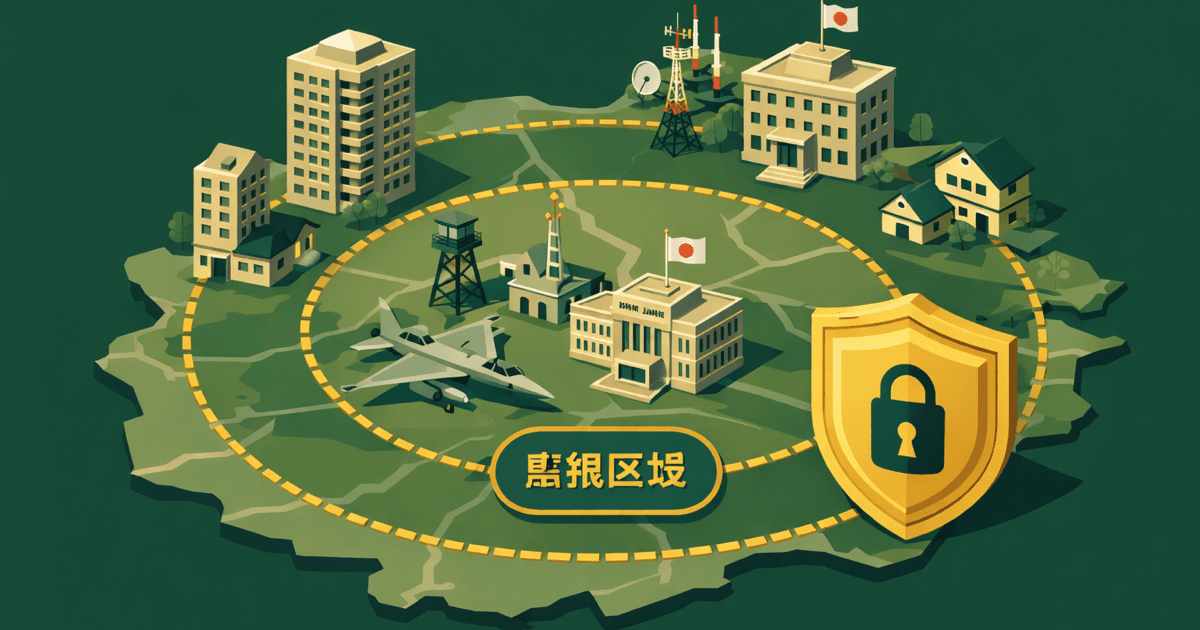
Japan's Act on the Review and Regulation of the Use of Real Estate Surrounding Important Facilities and on Remote Territorial Islands — commonly called the REIRA Act (重要土地等調査法) — is a national security law that imposes location-based restrictions on property use near sensitive facilities. Unlike FEFTA, which regulates transactions by non-residents, REIRA applies to all buyers regardless of nationality, including Japanese citizens.
For most foreign buyers purchasing condominiums in major urban centers, REIRA has no practical impact. But for those targeting properties in certain parts of Okinawa, border islands, or areas adjacent to military installations, understanding this law is essential.
This guide explains how REIRA works, which areas are affected, what the filing requirements are, and how to check whether a property falls within a designated zone. For information on the separate FEFTA reporting obligation that applies to non-resident buyers, see our 2026 FEFTA reporting guide.
Last updated: March 2, 2026
What Is the REIRA Act?
The REIRA Act (重要施設周辺及び国境離島等における土地等の利用状況の調査及び利用の規制等に関する法律) was enacted in June 2021 and came into force in stages from September 2022. It was Japan's first legislation specifically designed to regulate land use around facilities deemed important to national security.
Why Was REIRA Enacted?
The law was passed in response to concerns about land acquisitions near Self-Defense Force bases, particularly in Hokkaido and the Nansei Islands (the island chain stretching from Kyushu to Taiwan, including Okinawa). Reports of foreign-linked purchases near military installations prompted the government to establish a formal framework for monitoring and, in limited cases, restricting property use in sensitive areas.
REIRA does not ban property purchases. It creates a system of designation, monitoring, and advance notification for properties in specific geographic zones.
REIRA vs FEFTA: Key Differences
These two laws are frequently confused by foreign buyers, but they regulate different things entirely.
| FEFTA | REIRA | |
|---|---|---|
| What it regulates | Foreign investment transactions | Land use near sensitive locations |
| Who it applies to | Non-residents only | All buyers (Japanese and foreign) |
| Trigger | Acquiring real estate as a non-resident | Owning or using property in a designated zone |
| Filing type | Post-acquisition report (Form 22) | Pre-acquisition advance notification (in special monitored areas) |
| Submitted to | Bank of Japan (for Minister of Finance) | Cabinet Office (for Prime Minister) |
| Purpose | Investment monitoring | National security |
A non-resident buying property in a REIRA-designated special monitored area would need to comply with both laws: the REIRA advance notification before purchase, and the FEFTA Form 22 within 20 days after acquisition.
What Are Monitored Areas?
REIRA designates certain geographic zones around "important facilities" (重要施設) and on "remote territorial islands" (国境離島) as requiring oversight. The government designates these zones through Cabinet decisions, and the list is periodically expanded.
Facilities That Trigger Designation
The following types of facilities can serve as the basis for designating a monitored area:
| Facility Type | Examples |
|---|---|
| Self-Defense Force bases | JSDF bases, training grounds, radar stations, communications facilities |
| U.S. military installations | Bases operated under the U.S.-Japan Status of Forces Agreement (SOFA), including those in Okinawa, Kanagawa, and Tokyo |
| Nuclear power plants | Operating and decommissioned nuclear facilities |
| Critical infrastructure | Designated airports (e.g., Naha Airport), major ports, government communications centers |
| Remote territorial islands | Islands designated under the Act on Special Measures for Remote Territorial Islands (有人国境離島法), including parts of Tsushima, the Gotō Islands, and the Sakishima Islands |
How Large Are the Zones?
Monitored areas generally extend approximately 1,000 meters (1 km) from the perimeter of the designated facility. However, the exact boundaries are set by Cabinet Order for each designation and may vary based on topography and the nature of the facility.
As of early 2026, the government has designated monitored areas in multiple rounds, progressively expanding coverage:
| Designation Round | Date | Approximate Number of Areas |
|---|---|---|
| First batch | September 2022 | 58 areas |
| Second batch | December 2023 | Additional areas |
| Third batch | 2024–2025 | Ongoing expansion |
The Cabinet Office maintains the official list of designated areas. The total number continues to grow as the government reviews additional locations.
Monitored Areas vs Special Monitored Areas
REIRA creates two tiers of designation with different regulatory implications.
Monitored Areas (注視区域)
Monitored areas are the standard designation. Within these zones:
- The government can investigate how land and buildings are being used
- Property owners may be asked to provide information about their use of the property
- There is no advance notification requirement for purchases
- Normal property transactions proceed without additional filing obligations
- The government cannot block purchases or transfers
In practice, owning property in a standard monitored area has minimal day-to-day impact. You can buy, sell, and use property normally. The government reserves the right to investigate if there are concerns about how a property is being used (for example, if a property near a military base is being used for surveillance purposes).
Special Monitored Areas (特別注視区域)
Special monitored areas carry stricter requirements. These are designated around particularly sensitive facilities where the government has determined that enhanced oversight is necessary.
| Requirement | Details |
|---|---|
| Advance notification | Buyers must notify the Prime Minister (via the Cabinet Office) before completing a purchase of land or buildings of 200 m² or more |
| Review period | The government reviews the notification and may take up to 2 weeks to respond |
| Use restrictions | The government can issue recommendations (勧告) to restrict certain uses of the property |
| Enforcement | If recommendations are not followed, the government can issue binding orders (命令) with penalties for non-compliance |
| Penalties | Failure to file advance notification or violating an order can result in fines of up to ¥2 million or imprisonment of up to 2 years |
Comparison Table
| Feature | Monitored Area (注視区域) | Special Monitored Area (特別注視区域) |
|---|---|---|
| Government can investigate land use | Yes | Yes |
| Advance notification required for purchase | No | Yes (200 m² or more) |
| Government can recommend use restrictions | Yes (corrective recommendations) | Yes (corrective recommendations and orders) |
| Government can issue binding orders | No | Yes |
| Penalties for non-compliance | Corrective guidance only | Fines up to ¥2M / imprisonment up to 2 years |
| Government can require property disposal | No | Yes (in extreme cases, with compensation) |
The 200 m² Threshold in Special Monitored Areas
The advance notification requirement in special monitored areas applies to transactions involving land or buildings of 200 square meters or more. This threshold is significant because:
- Most condominiums have exclusive-use areas well under 200 m² (a typical Japanese condo unit is 50–80 m²)
- However, the 200 m² threshold applies to the land area involved in the transaction, not just the building footprint
- For detached houses on large plots, or undeveloped land, the threshold is more commonly exceeded
- For condominiums, the relevant area is the buyer's proportional share of the building's land area, which for a single unit in a large building is usually well under 200 m²
How This Affects Foreign Property Buyers
Impact in Major Urban Centers: Minimal
The vast majority of property transactions by foreign buyers in Japan take place in major urban centers — Tokyo, Osaka, Kyoto, Fukuoka, and resort areas. For most of these transactions, REIRA has no practical impact.
Central Tokyo districts such as Shinjuku, Shibuya, and Ginza-Nihonbashi are not within monitored areas. Standard condominium purchases in these areas proceed without any REIRA-related filing obligations. JRE provides MLIT-based transaction data for these and 20+ other locations across Japan, allowing buyers to evaluate actual transaction prices with confidence.
Similarly, popular investment areas in Osaka — including Umeda and Namba-Shinsaibashi — and in central Kyoto are generally unaffected.
Impact in Okinawa: Moderate to Significant
Okinawa is the prefecture most substantially affected by REIRA due to the concentration of U.S. military installations on the island. Approximately 15% of Okinawa's main island is occupied by U.S. military facilities under the Status of Forces Agreement, and monitored areas extend around each installation.
Areas where REIRA is most relevant in Okinawa include:
- Chatan and surrounding areas — Chatan is adjacent to Camp Foster, Kadena Air Base, and Camp Lester. Properties near Chatan American Village may fall within monitored zones, particularly those close to base perimeters.
- Central Okinawa — The corridor between Ginowan (home to Marine Corps Air Station Futenma) and Kadena is heavily designated.
- Naha city fringe — While central Naha is largely outside monitored areas, properties near Naha Military Port or the southern edge of Naha Air Base may be affected.
- Onna Village and northern areas — Camp Hansen and other northern installations create monitored zones in parts of central and northern Okinawa.
For buyers interested in Okinawa real estate, checking REIRA status is an important due diligence step. Our Okinawa Onna investment guide provides area-specific analysis.
Impact in Niseko and Hokkaido: Limited but Present
Hokkaido was one of the regions that initially prompted REIRA's enactment, following reports of land acquisitions near Self-Defense Force facilities. The Kutchan/Niseko area itself is primarily a resort and residential zone, and most standard resort property transactions are unlikely to be affected. However, properties near JSDF installations in other parts of Hokkaido may fall within designated zones.
Impact on Border Islands
Properties on designated "remote territorial islands" (有人国境離島) are subject to REIRA oversight. These islands include:
- Tsushima (Nagasaki Prefecture) — the island closest to the Korean Peninsula
- Gotō Islands (Nagasaki Prefecture)
- Sakishima Islands (Okinawa) — including Miyako Island and Ishigaki Island
- Yonaguni Island (Okinawa) — Japan's westernmost island, home to a JSDF radar station
For buyers considering properties on these islands, confirming REIRA zone status is essential. Both Miyako and Ishigaki have growing real estate markets driven by resort and tourism demand — JRE provides transaction data for these locations that can help assess market conditions alongside regulatory considerations.
How to Check If a Property Is in a Monitored Area
There are three reliable methods to determine whether a specific property falls within a REIRA-designated zone.
Method 1: Cabinet Office Website
The Cabinet Office (内閣府) maintains the official registry of designated monitored and special monitored areas on its website. The designations are published as maps and lists of covered zones following each Cabinet decision.
- Website: Cabinet Office, Section on Important Land Use Investigation (重要土地等調査法)
- Format: PDF maps showing zone boundaries overlaid on geographic reference maps
- Language: Japanese only
- Updates: Published after each new batch of designations
Method 2: Ask Your Real Estate Agent
Under Japanese real estate law, licensed agents (宅地建物取引業者) are required to disclose material information about properties in the Important Matters Explanation (重要事項説明書) delivered before the purchase contract is signed.
If a property falls within a REIRA-designated monitored or special monitored area, the agent must disclose this fact as part of the Important Matters Explanation. This includes:
- Whether the property is in a monitored area or special monitored area
- What filing obligations apply (advance notification for special monitored areas)
- Any known use restrictions
This is the most practical approach for most foreign buyers. When working with a Japanese agent, explicitly ask whether the property is in a REIRA zone during the due diligence phase — before signing the purchase contract.
For a full overview of the buying process in Japan, including the Important Matters Explanation stage, see our step-by-step guide.
Method 3: Municipal Government Inquiry
Local municipal offices (市区町村役場) can confirm whether a specific address falls within a REIRA-designated zone. Contact the planning or general affairs division (企画課 or 総務課) with the property address for confirmation.
This method is useful as a secondary verification, particularly for properties in areas where designation boundaries are close to the property location.
Filing Requirements for Special Monitored Areas
If you are purchasing property of 200 m² or more in a special monitored area, you must complete an advance notification before the transaction closes.
Step-by-Step Filing Process
Step 1: Confirm designation status Verify that the property is in a special monitored area (not just a standard monitored area) and that the transaction exceeds the 200 m² threshold.
Step 2: Prepare the notification The advance notification must include:
- Buyer's name, address, and nationality
- Property location and area
- Intended use of the property
- Transaction details (price, counterparty)
Step 3: Submit to the Cabinet Office The notification is addressed to the Prime Minister (内閣総理大臣) and submitted through the Cabinet Office (内閣府). This is different from FEFTA Form 22, which goes to the Bank of Japan.
| Filing Detail | Information |
|---|---|
| Addressed to | Prime Minister (via Cabinet Office) |
| Timing | Before completing the purchase (advance notification) |
| Review period | Up to 2 weeks from receipt |
| Threshold | 200 m² or more (land area of the transaction) |
| Language | Japanese |
| Fee | None |
Step 4: Wait for review After submission, the Cabinet Office reviews the notification. During the review period:
- The transaction cannot be completed until the review period expires or the government provides clearance
- In most cases, the review period passes without government action, and the transaction proceeds normally
- If the government has concerns, it may request additional information or issue recommendations regarding the intended use
Step 5: Proceed with the transaction Once the review period expires without government action, or after clearance is received, the purchase can proceed through normal channels — contract signing, settlement, ownership registration, and (for non-residents) FEFTA Form 22 filing.
What Happens If the Government Objects?
Government intervention under REIRA is rare and follows a graduated process:
- Recommendation (勧告): The government recommends that the buyer modify their intended use or, in extreme cases, refrain from completing the purchase.
- Order (命令): If the recommendation is not followed, the government can issue a binding order. Violating an order carries penalties of up to ¥2 million in fines or up to 2 years of imprisonment.
- Compulsory disposal (in extreme cases): The government can, under exceptional circumstances, require the disposal of property deemed to pose a national security risk. Compensation is provided in such cases.
In practice, as of early 2026, there have been no publicly reported cases of the government blocking a standard residential or commercial property purchase under REIRA. The law is designed primarily as a monitoring and deterrence framework, with enforcement actions reserved for genuinely concerning situations.
Practical Impact: Is REIRA a Major Concern?
For the vast majority of foreign property buyers in Japan, REIRA is not a significant barrier to investment. Here is a practical assessment:
Transactions Unlikely to Be Affected
- Condominiums in major cities — Tokyo, Osaka, Kyoto, Fukuoka, and Sapporo. Central commercial and residential districts are generally not within REIRA zones. Actual transaction data from MLIT — available on JRE for locations including Meguro-Ebisu, Chiyoda-Marunouchi, and Roppongi-Azabu — confirms robust foreign buyer activity in these areas.
- Standard residential purchases anywhere not adjacent to a designated facility
- Resort properties in most tourism areas (Niseko town center, Karuizawa, Hakone, etc.)
- Condominium units under 200 m² (exclusive use area), even in special monitored areas — the advance notification threshold relates to land area, and most condo units' proportional land share is well under this
Transactions That Require Due Diligence
- Properties in Okinawa near U.S. military bases — particularly Chatan, Ginowan, Kadena, and surrounding areas
- Large land purchases (200 m²+) in any designated area
- Properties on border islands — Tsushima, Yonaguni, parts of the Sakishima chain
- Properties adjacent to Self-Defense Force facilities — scattered locations across Japan, including in Hokkaido
The Bottom Line
If you are buying a condominium in Tokyo, Osaka, or another major city, REIRA is unlikely to affect your transaction in any way. If you are buying land or property in Okinawa, on a border island, or near a known military installation, spend 30 minutes confirming the REIRA status before signing a contract. Your real estate agent is legally obligated to disclose this information.
The costs associated with any additional REIRA compliance are minimal compared to the overall buying costs and fees of a Japanese property transaction.
Frequently Asked Questions
Does REIRA apply to condominium purchases?
REIRA applies to all real estate transactions within designated zones, including condominiums. However, the advance notification requirement for special monitored areas only triggers for transactions involving 200 m² or more of land area. For a typical condominium purchase, the buyer's proportional share of the building's land is usually well under 200 m², meaning the advance notification requirement does not apply even if the building is within a special monitored area. The government's investigation authority still applies, but this has no practical impact on normal residential use.
Are Tokyo properties affected by REIRA?
Central Tokyo commercial and residential districts — Shinjuku, Shibuya, Ginza, Roppongi, Minato — are generally not within REIRA-designated zones. However, properties near specific facilities such as JSDF installations in western Tokyo (e.g., Yokota Air Base in Fussa) or certain defense-related facilities could be within designated areas. For standard condominium purchases in central Tokyo, REIRA is not a concern.
Can the government force me to sell my property under REIRA?
In theory, yes, but this is an extreme measure reserved for exceptional national security situations. The law allows the government to order the disposal of property if its use is deemed to pose a threat to national security, with compensation provided to the owner. As of early 2026, there are no publicly reported cases of compulsory disposal under REIRA. The practical risk for standard residential and commercial property owners is extremely low.
How long does the advance notification review take in special monitored areas?
The standard review period is up to two weeks from the date the Cabinet Office receives the complete notification. In most cases, the review period expires without any government action, and the transaction proceeds. If the government requires additional information, the review period may be extended. Your real estate agent and judicial scrivener should build this timeline into the transaction schedule.
Does REIRA affect property values?
There is no clear evidence that REIRA designation systematically reduces property values. In areas like Okinawa, strong demand driven by tourism and the U.S. military presence continues to support the market. However, the additional compliance steps for special monitored areas may modestly slow transaction timelines, which some buyers factor into their decision-making.
Is REIRA being expanded?
Yes. The government has been progressively expanding the list of designated areas since the law took effect in 2022. Additional batches of designations are expected. If you are purchasing property near any type of military or critical infrastructure facility, it is worth checking whether the area has been designated or is likely to be designated in the future.
Do I need to comply with both REIRA and FEFTA?
If you are a non-resident buying property in a REIRA-designated special monitored area (200 m²+ land area), you may need to comply with both:
- REIRA: Advance notification to the Cabinet Office before purchase
- FEFTA: Form 22 filing to the Bank of Japan within 20 days after purchase
These are separate filings submitted to different government bodies. Your judicial scrivener or attorney should coordinate both. For full details on FEFTA compliance, see our FEFTA 2026 reporting guide.
How do I check the latest designated areas?
The Cabinet Office publishes updated lists and maps of designated areas after each round of designations. The information is available on the Cabinet Office website in Japanese. Your real estate agent is also legally required to disclose REIRA zone status as part of the Important Matters Explanation (重要事項説明) before you sign a purchase contract.
Related Articles
- Japan FEFTA Reporting 2026: New Rules for Foreign Real Estate Buyers →
- FEFTA Form 22: Step-by-Step Filing Guide →
- Japan Property Buying Costs: Complete Fee Breakdown →
- How to Buy Property in Japan: Complete Guide →
JRE Transaction Data
Whether a property is in a REIRA zone or not, understanding actual transaction prices is essential for making informed investment decisions. JRE provides MLIT-sourced transaction data for over 20 locations across Japan — including Okinawa, Niseko, and all major urban centers — based on actual recorded sale prices rather than asking prices.
Disclaimer
This article provides general information about the REIRA Act and its implications for property buyers in Japan. It is not legal advice. Designated areas, regulations, and enforcement practices may change. The information reflects the regulatory environment as of March 2026. Always consult with a qualified legal professional — such as a licensed attorney (弁護士) or judicial scrivener (司法書士) — for advice specific to your transaction.
Sources referenced include the Act on the Review and Regulation of the Use of Real Estate Surrounding Important Facilities and on Remote Territorial Islands (重要施設周辺及び国境離島等における土地等の利用状況の調査及び利用の規制等に関する法律), Cabinet Office publications, and Ministry of Defense public information.